
Marble vs Granite Countertop Installation: Which Is Right for Your Kitchen?
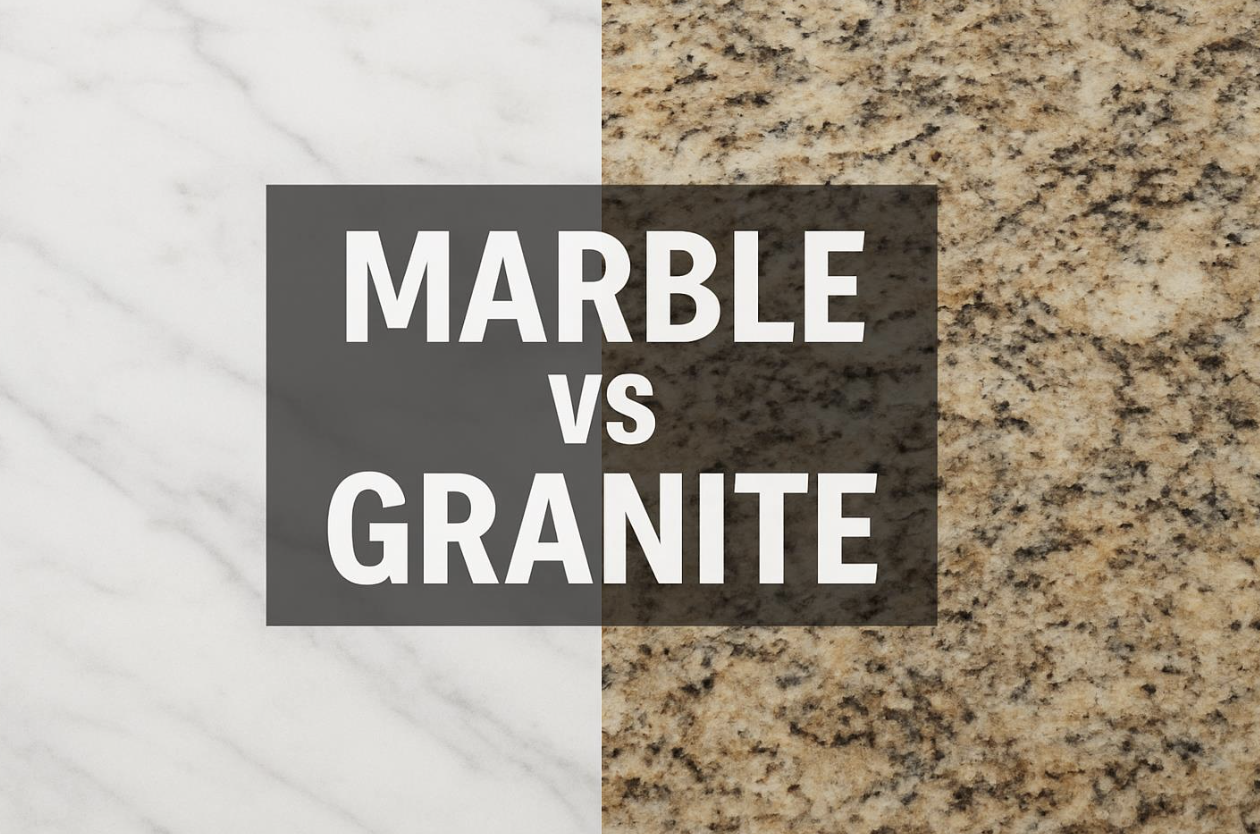
Last month, a couple stood staring at two slabs. Carrara marble on the left—white with subtle gray veining. Steel Grey granite on the right—deep, flecked with silver, almost alive under the lights.
Finally, the husband turned to me and said: "Just tell us which one to pick. We can't decide."
Here's what I told them—and what I'll tell you: There's no "better" choice. There's only the right choice for how you actually live.
If you're choosing between marble countertop installation and granite kitchen countertops installation, you're already ahead of most homeowners, both are premium natural stones. Both will last decades. Both will make your kitchen look expensive.
But they're fundamentally different materials with different personalities. Let's break down what that means.
Granite: The Workhorse That Looks Like Art
Granite forms deep in the earth over millions of years as molten rock slowly cools and crystallizes. The result? A stone so hard and dense that it laughs at your kitchen's daily abuse.
What Granite Feels Like to Live With
I installed Uba Tuba granite in a Hopkinton kitchen five years ago. The homeowner has three teenage boys who treat the kitchen like a locker room. She bakes constantly. They set hot pans directly on the counter (despite my warnings, though granite can handle it). They've dropped dishes, spilled wine, sliced vegetables without cutting boards.
The counters still look like new!
That's granite's superpower. It doesn't just survive real life—it barely notices it.
The Honest Benefits of Granite
Scratch Resistance That Actually Works: Drop a knife? Drag a cast iron pan? Granite doesn't care. It's one of the hardest natural materials on earth. You'd have to actively try to scratch it.
Heat Resistance You Can Trust: Set down a 400-degree pan straight from the oven? Granite handles it without breaking a sweat. (Still use trivets to be safe, but granite won't punish you if you forget.)
Low Maintenance If Sealed Properly: Seal it once a year (takes 15 minutes), and granite resists stains beautifully. Coffee, wine, tomato sauce—wipe them up within a reasonable time and they won't leave a mark.
Patterns That Make Every Kitchen Unique: No two granite slabs are identical. We'll show you full slabs before anything is ordered. The stone you pick is the exact stone that gets cut for your kitchen.
Marble: When Only Luxury Will Do
Marble forms differently than granite. It starts as limestone buried deep underground, then heat and pressure transform it into crystallized stone. The result? A material that's softer, more porous, and undeniably elegant.
Walking into a kitchen with Carrara marble is a different experience than walking into one with granite. Marble has a luminosity—it reflects light in a way that makes spaces feel brighter, larger, more refined.
What Marble Feels Like to Live With
Three weeks ago, I installed Carrara marble in a Bolton bathroom. The homeowner had been debating between marble and quartz for months. Her designer pushed quartz (practical, low-maintenance). But she kept coming back to the marble slab.
When we finished the installation, she stood there just looking at it. Then said: "I'm so glad I didn't play it safe. This is exactly what I wanted."
That's marble's power—it elevates a space from nice to stunning. But it demands respect.
The Honest Reality of Marble
It Etches: Lemon juice, wine, vinegar—acidic liquids will dull the polish if left to sit. It's not staining (that can be prevented with sealing). It's etching—a chemical reaction that dulls the surface.
It Scratches More Easily Than Granite: Marble is softer. A knife dragged across it might leave a mark. Heavy pots moved carelessly might scuff it. This isn't a defect—it's the nature of the material.
It Requires More Maintenance: Seal it every 6 months. Use pH-neutral cleaners only. Wipe up acidic spills immediately. Marble asks more of you than granite does.
The Real Decision Framework
Forget the generic "pros and cons" lists. Here's how to decide:
Question 1: How do you use your kitchen?
If your honest answer is "We cook every night, the kids do homework at the island, and we're not particularly careful with spills"—choose granite.
If your honest answer is "We cook occasionally, we're mindful about cleaning up, and we want the space to feel luxurious"—marble might work.
Question 2: What will stress you out more?
Some people are stressed by imperfection. An etch mark on marble would bother them every time they see it. Those people should choose granite.
Other people are stressed by living in a space that feels "safe" but not beautiful. They'd rather have a few etch marks on stunning marble than perfect granite that doesn't make their heart sing. Those people should choose marble.
Final Thoughts
Both marble and granite are premium natural stones that will last decades with proper care. Neither is "better." They're different tools for different jobs.
Choose granite if you want durability, easy maintenance, and a surface that handles real life without complaint.
Choose marble if you want undeniable luxury, timeless elegance, and you're willing to care for it properly.
Need help deciding?
Call us at +1(978) 568-1911 or visit stoneconcepts.net to set up a free consultation. We'll walk you through what's available and help you pick the right stone for your home.